In the present era, being conscious of appearance is completely understandable. Anything that can affect your personality or health deserves proper attention. Therefore, noticing an unusually enlarged breast size in some men can be uncomfortable and even confusing.
It can lower self-confidence, limit clothing choices, and discourage participation in sports or other physical activities. This condition is medically known as gynecomastia, and in some cases, gynecomastia surgery in Lahore may be recommended when non-surgical treatments are not effective.
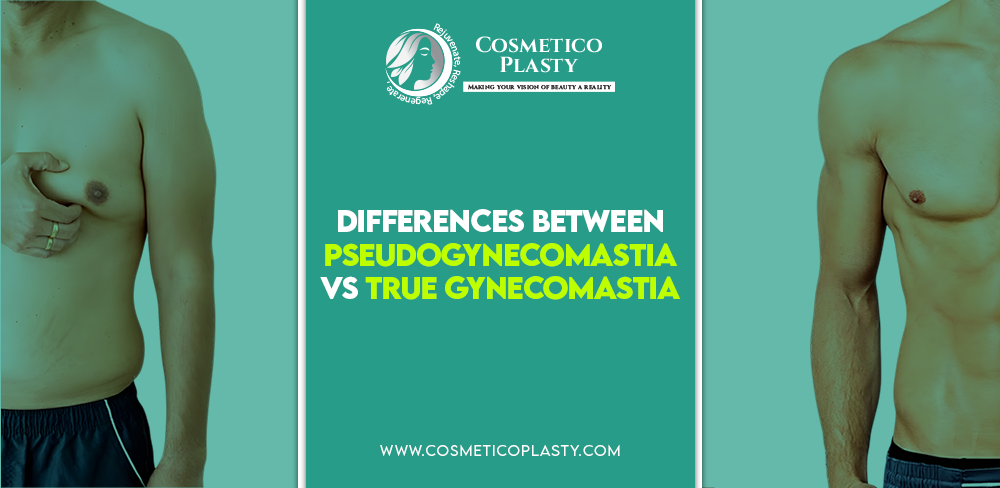
However, there is something important that everyone should know. Two different conditions can cause enlarged breasts in men: pseudogynecomastia and true gynecomastia. Although both conditions appear similar, their causes, diagnosis, and treatment methods differ.
Understanding the difference between them is the first step toward receiving the right treatment and achieving the best possible results.Prof. Dr. Mustehsan Bashir at Cosmeticoplasty is renowned for his individualized strategies that are based on his clinical insights about each patient’s condition.
His extensive experience in body sculpting and contouring is foundational to his expertise. This article is going to compare pseudogynecomastia vs true gynecomastia in detail, including their symptoms, causes, diagnosis and treatment.
Understanding Male Chest Enlargement
A firmer chest appearance often demonstrates masculinity and is, for sure, a major physical difference between men and women. Hence, the impact of unusual breast enlargement in males is very deep and multidimensional. To understand what exactly happens, it is crucial to have a look at the inner composition of the male chest. It consists of:
Skin
Fat Tissue
Breast Glandular Tissue
Muscles (mainly pectoral muscles)
Any increase in either the amount of fat or breast tissue may lead to an enlargement of the chest area. A rise in muscle usually enhances the masculine impact and makes the chest more attractive. Depending on the nature of abnormality ( fat or tissue growth), experts classify it as pseudogynecomastia vs true gynecomastia.
However, distinguishing the two is quite difficult because they share similar appearances externally. In this scenario, a proper diagnosis by professionals is the only way to conclude. The right treatment is also possible if and only if the diagnosis is right. Otherwise, the situation may worsen, leading to physical as well as mental health issues.
What Is True Gynecomastia?
Gynecomastia is a benign disorder that involves swelling of the glandular breast tissue in males. The most frequent cause of the condition is an imbalance in the production of two important hormones,
Estrogen
Testosterone.
Although estrogen is commonly known as a female hormone, it is naturally produced in men as well, but in much smaller amounts. If, for any reason, estrogen levels become higher relative to testosterone, excessive growth of glandular breast tissue can occur, leading to gynecomastia.
This condition may be triggered by hormonal changes during adolescence or older age, certain medications, underlying medical conditions, or endocrine disorders. As a result, firm glandular tissue develops beneath the nipples, which may cause nipple tenderness, increased sensitivity, or the formation of a lump beneath the nipple-areolar complex.
Understanding the underlying cause is essential before considering the gynecomastia surgery process, as treatment depends on an accurate diagnosis and the severity of the condition.
In addition, it may occur in the following two ways.
unilateral, where it affects one breast
bilateral, where it affects two breasts
Major Causes
Various causes might lead to glandular breast development. Some of these are;
1. Puberty
Hormone level becomes highly unstable during puberty. Increased activity of estrogen during a short period of time can stimulate breast tissue development. Gynecomastia that occurs during puberty often disappears by itself within six months to two years.
2. Aging
With aging, there is a decline in testosterone production. This change sometimes leads to an increased ratio of estrogen, which stimulates breast development. Men older than 50 years are especially predisposed to the development of gynecomastia.
3. Prescription Drugs
Some prescription drugs have been associated with the development of gynecomastia:
Anti-androgenic drugs
Anabolic steroids
Antidepressants
Blood pressure drugs
Medicine for Cardiovascular issues
Medication for stomach ulcers
Prostate treatment drugs
If you develop gynecomastia as a result of taking prescribed drugs, your doctor will suggest an alternative therapy.
4. Underlying Health Problems
Some health problems can significantly make changes in hormone production.
Some examples are;
Liver diseases
Kidney disease
Hyperthyroidism
Disorders of the pituitary gland
Disorders of the testicles
Certain types of tumors
5. Drug or Alcohol Abuse
Various studies show that some substances could serve as a trigger for gynecomastia. Top of the list are:
Alcohol
Marijuana
Amphetamines
Opioids
Anabolic steroids
Symptoms
Males suffering from gynecomastia could develop:
Enlarged breast tissue
Swollen nipples
Tender chest
Tender area around the nipples
Hard tissue under the areola
Disproportionate chest
Certain patients may have psychological problems owing to their feelings of embarrassment or low self-confidence.
Restore Your Confidence And Comfort: Visit Cosmeticoplasty for Advanced Gynecomastia Solutions
Meet Prof. Dr. Mustehsan Bashir To Receive Expert Gynecomastia Treatment and Lasting Results
The term “pseudo-gynecomastia” or “false gynecomastia” refers to enlargement of the chest area as a result of excess fat deposition.
As opposed to gynecomastia, it does not relate to any hormonal problems. Rather, pseudogynecomastia normally occurs due to overweight or obesity. Men with false gynecomastia tend to suffer from fat deposition in the whole body, including the breast area. In some cases, only the breast may suffer more.
Even though it is not a health-threatening condition, its prime effect appears in lowering one’s self-esteem and confidence. The mentioned psychological problems can significantly impact patients’ physical health.
Causes
Fat deposition is what mainly causes pseudogynecomastia, and the reasons for this excessive fat could be
Obesity
The buildup of body fat usually results in the storage of extra fat in the chest region. It causes a breast-like look without the presence of any enlargement in the glands.
Improper Diet
Taking too many calories, sugars, and other processed foods might result in overall fat accumulation and enlargement of the chest.
Absence of Physical Exercise
An inactive life tends to cause fat deposition and weight gain all over the body, and thus in the breast area too.
Fluctuation of Body Weight
People undergoing significant weight fluctuations are more likely to develop pseudogynecomastia.
Symptoms
Pseudogynecomastia is characterized by:
Fullness of soft chest tissue
Fat deposition
Symmetric enlargement
Absence of nipple tenderness
Enlargement linked to body fat
The disease usually becomes evident as body mass increases.
Treatment Options: Where Does The Difference Come From?
The treatment options that can deliver maximum health benefits can be adopted only on the basis of your condition. Hence, according to gynecomastia types, possible treatment choices vary and are as follows.
Pseudogynecomastia
1. Lifestyle Modification that comprises:
Weight Management
Healthy eating
Workouts
Long-term fitness strategie
2. Liposuction
For men who maintain a healthy weight but still have stubborn chest fat, it may provide additional contouring and definition.
True Gynecomastia
Medication
Gynecomastia surgery comprising
Gland excision
Liposuction
A combination of both
Pseudogynecomastia vs True Gynecomastia: Quick Summary
To make the comparison between pseudogynecomastia vs true gynecomastia simple and easy, here is a quick summary.
Factors
Pseudogynecomastia
True Gynecomastia
Does fat cause it?
Yes
No
Does tissue growth cause it?
No
Yes
Can weight loss eliminate it?
Often Yes
Usually No
Is it painful?
Rare
Sometimes
Does it require surgery?
Sometimes
Often
Final Words
In conclusion, gynecomastia, although not a life-threatening condition, can significantly affect an individual’s physical appearance, emotional well-being, and self-confidence. Surprisingly, not every case of male breast enlargement is true gynecomastia. This is why medical experts carefully distinguish between pseudogynecomastia and true gynecomastia.
Recognizing the early signs of gynecomastia and understanding the differences between these conditions are essential for receiving an accurate diagnosis. Although they appear similar and often share comparable symptoms, they have different underlying causes and require different treatment approaches.
Choosing the right treatment is only possible when the condition is correctly identified. In this regard, a highly experienced and skilled specialist like Prof. Dr. Mustehsan Bashir can provide an accurate diagnosis and recommend the most effective treatment plan.
His clinical expertise, sound judgment, and successful treatment outcomes have earned the trust and appreciation of many patients. By seeking timely evaluation and appropriate treatment from a qualified expert, you can restore both your confidence and your quality of life.
Medically Reviewed & Published By
Trusted medical content backed by academic expertise
This article has been reviewed and published by Professor Dr. Mustehsan Bashir, a renowned cosmetic and plastic surgeon with over 25 years of clinical and surgical experience.
Author of Research Methodology and Basic Biostatistics and a globally published researcher with 400+ academic citations, his work is featured on Google Scholar and leading peer-reviewed platforms.